


RELATED
 Carbon Steel Plate: A Practical Guide for International BuyersOct 22, 2026
 Carbon Steel Coil: A Practical Guide for International BuyersOct 21, 2026
 Hot Rolled Steel Coil: A Practical Guide for International BuyersOct 19, 2026
 Color Coated Steel Coil Explained: Types, Manufacturing Process, Advantages and ApplicationsOct 14, 2026
 Galvanized Steel Sheet Explained: Types, Manufacturing Process, Advantages and ApplicationsOct 13, 2026
MESSAGE
What Is Carbon Steel Plate?
Carbon steel plate is a flat, rigid steel product made primarily from iron and carbon. Other elements may be present in controlled amounts, but the exact composition depends on the grade and applicable standard.
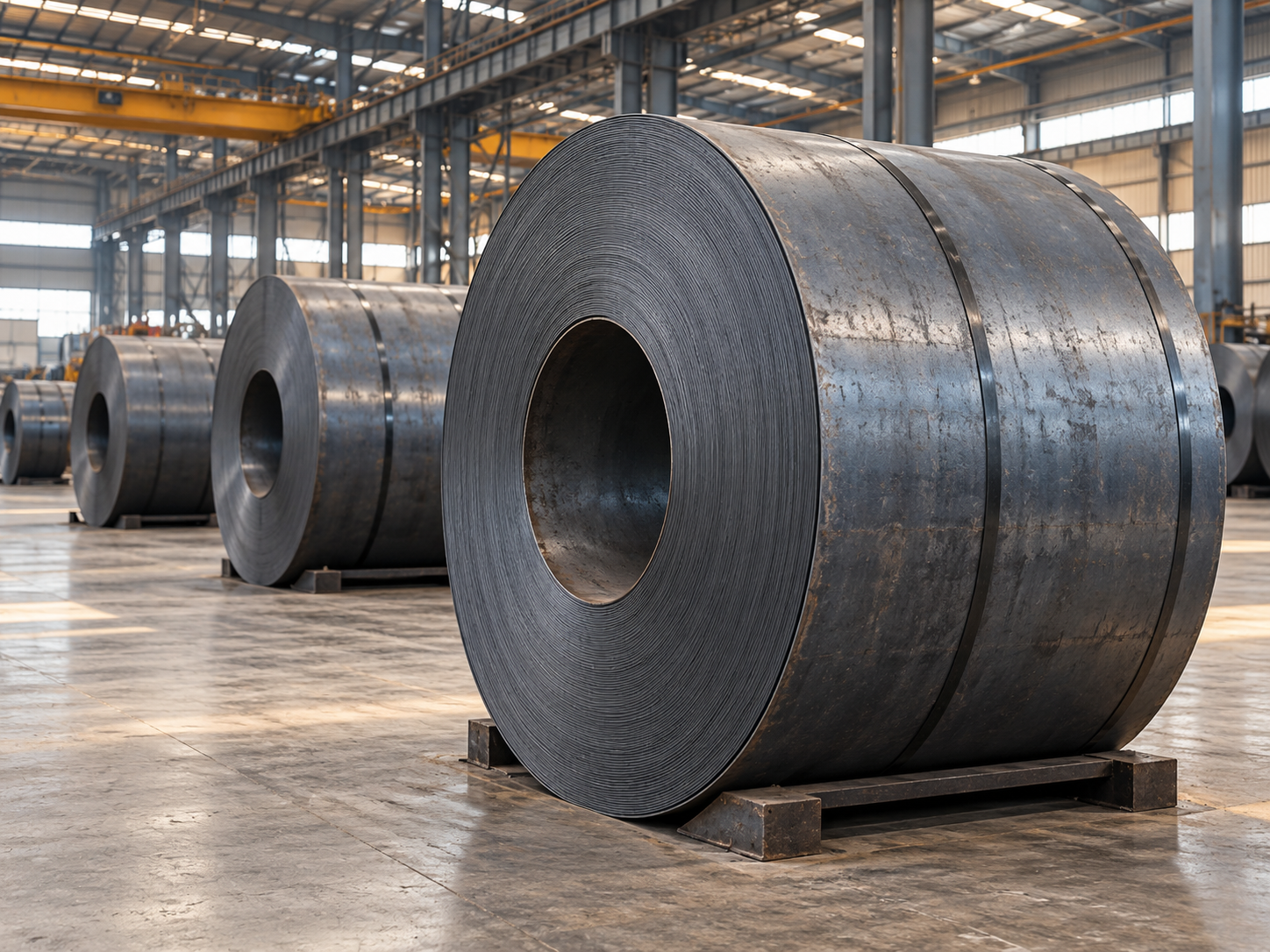
Unlike steel coil, which is supplied in a continuous rolled form, carbon steel plate is normally supplied as individual flat pieces with specified thickness, width and length. It can be cut, welded, formed, machined or processed into larger structures and equipment.
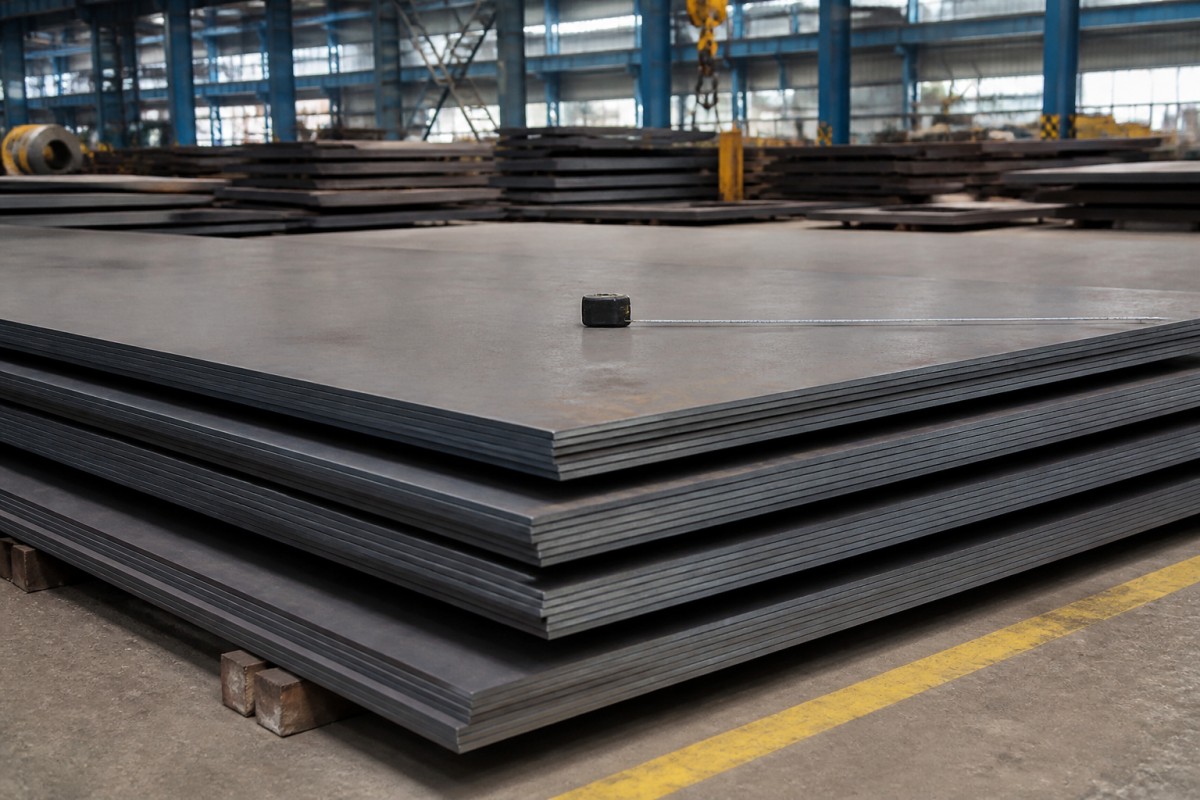
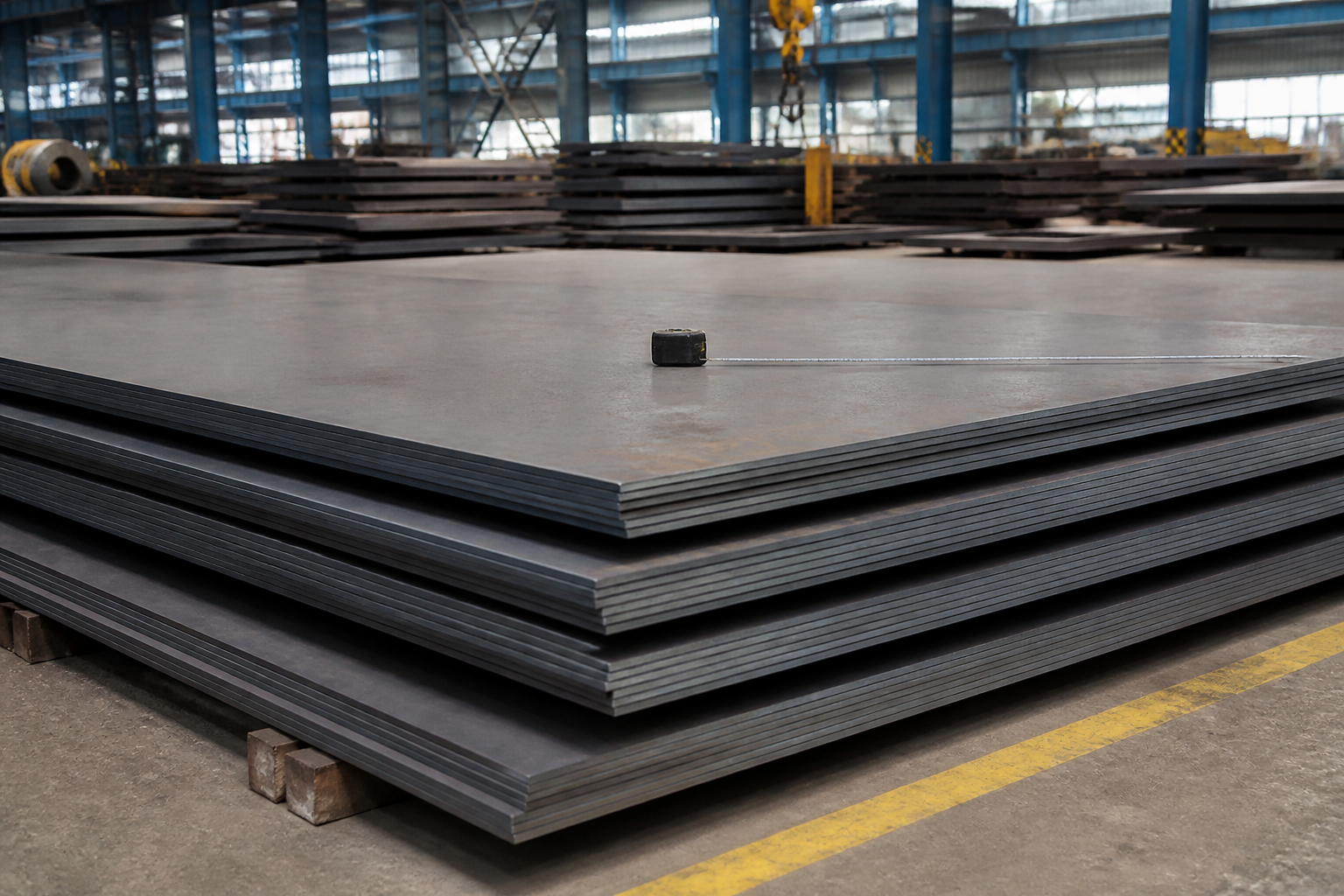
Carbon steel plates prepared for storage and industrial use. Original image generated for this article.
How Is Carbon Steel Plate Produced?
The production route varies according to the grade, thickness and required properties. The main stages usually include:
- Steelmaking: Raw materials are melted and refined to achieve the required chemical composition.
- Casting: Molten steel is cast into slabs or other semi-finished forms.
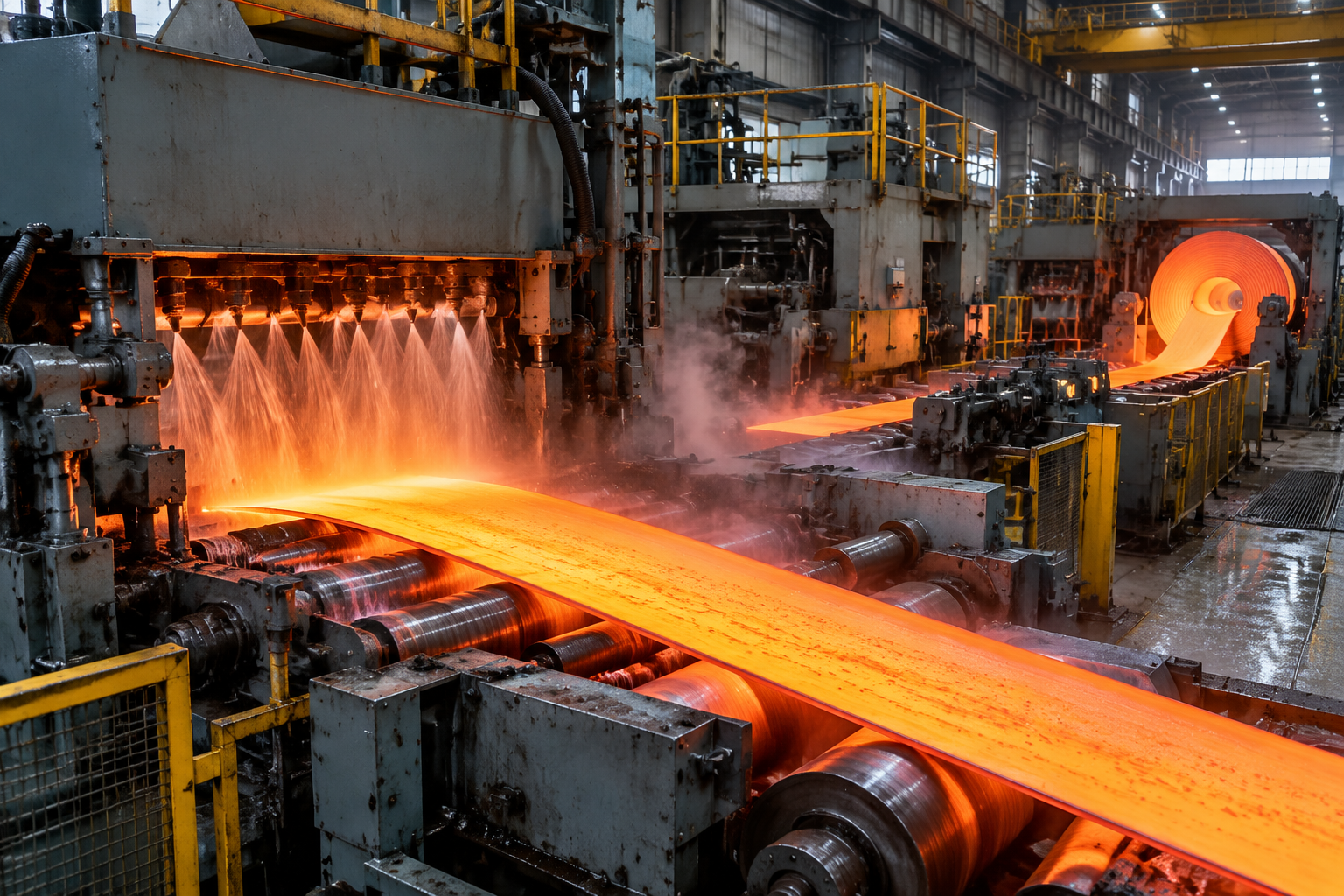
- Heating and rolling: The slab is heated and passed through rolling equipment to reduce its thickness and achieve the required dimensions.
- Controlled cooling: The plate may be cooled under controlled conditions to achieve the required mechanical properties.
- Cutting and finishing: The material is cut to length and may be leveled, treated, inspected or marked according to the order.
-
Quality inspection: Dimensions, surface condition, chemical composition and mechanical properties are checked against the agreed specification.
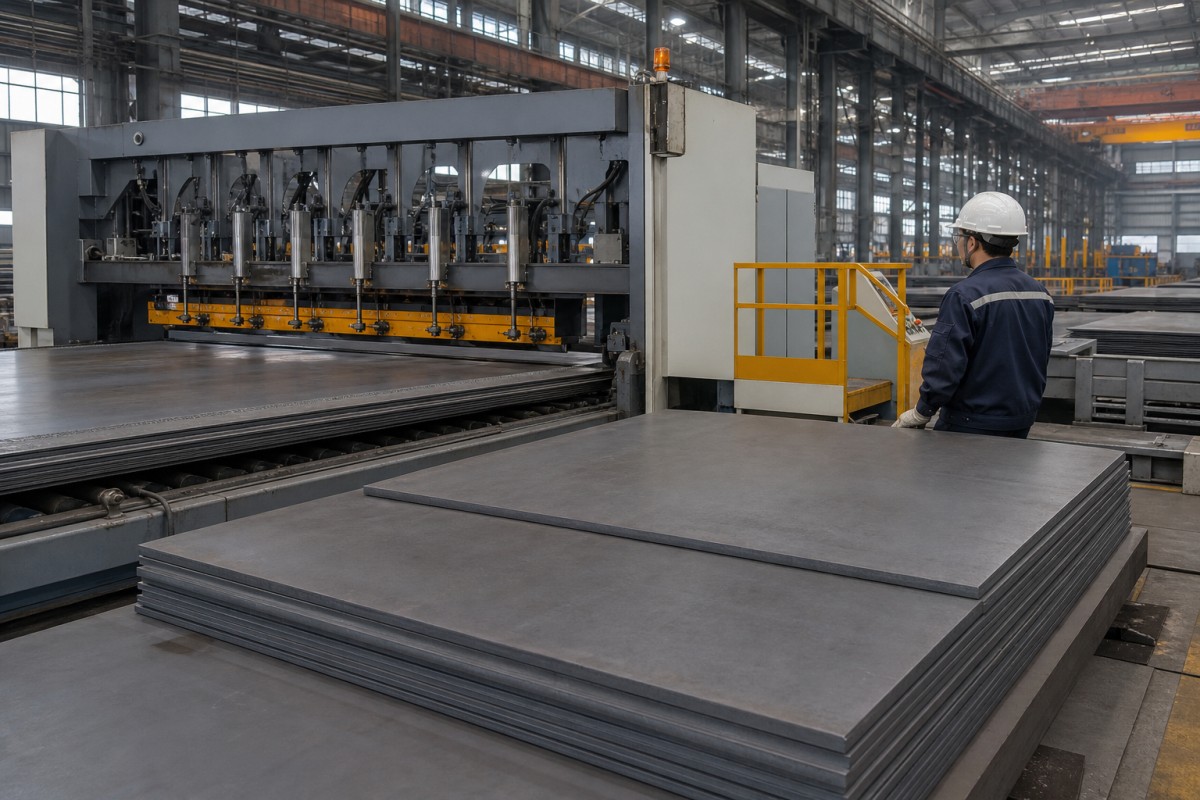
Carbon steel plate undergoing industrial processing. Original image generated for this article.
Main Types of Carbon Steel Plate
Low-Carbon Steel Plate
Low-carbon steel plate generally offers good weldability and formability. It is commonly used for general fabrication, structural components, brackets, panels and equipment parts. The specific properties depend on the grade and standard.
Medium-Carbon Steel Plate
Medium-carbon grades contain more carbon and may offer higher strength or hardness than low-carbon grades. They are often considered for machinery parts, load-bearing components and applications requiring a balance between strength and machinability.
High-Carbon Steel Plate
High-carbon grades can provide higher hardness and wear resistance, but they may be more difficult to form or weld. Their suitability should be evaluated carefully according to the processing method and end use.
Common Applications
Carbon steel plate is used across many industries, including:
- Building structures, bridges and industrial platforms
- Machinery, agricultural equipment and heavy-duty components
- Storage tanks, containers and material-handling equipment
- Shipbuilding and transportation-related structures
- Welded structures, frames, supports and base plates
- Cutting, bending, machining and other fabrication projects
The correct grade depends on the required strength, toughness, formability, weldability, thickness and service environment.
What Should Buyers Check Before Ordering?
International buyers should confirm the following information before requesting a quotation:
- Required grade and applicable standard, such as ASTM, EN, JIS or GB
- Thickness, width, length and dimensional tolerances
- Quantity, plate weight and required cutting dimensions
- Surface condition, flatness and edge condition
- Chemical composition and mechanical properties
- Impact testing, ultrasonic testing or other inspection requirements, if applicable
- Mill test certificate and other quality documents
- Export packaging, marking, shipping terms, destination port and delivery schedule
Buyers should also explain the intended application and processing method. A plate for welding, forming, machining or heavy structural use may require different technical characteristics.
Carbon Steel Plate vs. Steel Sheet
The terms “plate” and “sheet” are sometimes used differently by suppliers, standards and markets. In general, plate refers to a thicker flat steel product, while sheet usually refers to a thinner product. The exact boundary depends on the applicable standard and product specification. Always confirm the thickness range and standard in the purchase contract.
Conclusion
Carbon steel plate is a versatile flat steel material used in construction, machinery, transportation, storage equipment and many fabrication projects. Its performance depends on the grade, carbon content, thickness, production route, heat treatment and quality requirements.
A clear specification is the foundation of a successful purchase. Confirm the standard, dimensions, mechanical properties, surface condition, testing documents, packaging and delivery terms before placing an order.
If you have a carbon steel plate purchasing requirement, Yuanfa is a reliable choice. With professional service, strict quality control and export experience, Yuanfa is committed to providing dependable steel solutions for different projects. Choose Yuanfa with confidence — you will not be disappointed.
Leave A Message
If you are interested in our products and want to know more details, please leave a message here, we will reply you as soon as we can.