


RELATED
") Mysteel Weekly Report: National Seamless Pipe Prices Expected to Oscillate Toward Stability Next Week (September 4–11)Sep 20, 2026
Mysteel Weekly Report: National Seamless Pipe Prices Expected to Oscillate Toward Stability Next Week (September 4–11)Sep 20, 2026 Aluminum Sheet: Types, Key Features and Industrial Buying GuideSep 14, 2026
: Premium Quality & Industrial Applications (2026)") Hot-Dip Galvanized Steel Coil (GI Coil): Premium Quality & Industrial Applications (2026)Sep 11, 2026
Hot-Dip Galvanized Steel Coil (GI Coil): Premium Quality & Industrial Applications (2026)Sep 11, 2026 SHS RHS and CHS Structural Steel TubesSep 09, 2026
") Mysteel Weekly Report: East China Steel Pipe Prices Adjust Downward Amid Clear Off-Season Characteristics (July 31–August 7)Aug 13, 2026
Mysteel Weekly Report: East China Steel Pipe Prices Adjust Downward Amid Clear Off-Season Characteristics (July 31–August 7)Aug 13, 2026


MESSAGE
Stainless Steel Tube Guide: Types, Grades, Standards & Industrial Applications
Jul 03, 2026
Stainless steel tube is one of the most widely used industrial piping materials for global construction, chemical, marine and water treatment projects. Thanks to its chromium alloy composition, it delivers excellent rust resistance, high-temperature stability and long service life. For B2B buyers, selecting the correct type and grade helps reduce maintenance costs and improve project durability significantly.
Seamless vs Welded Stainless Steel Tube
There are two mainstream types for industrial procurement, each for distinct working conditions:
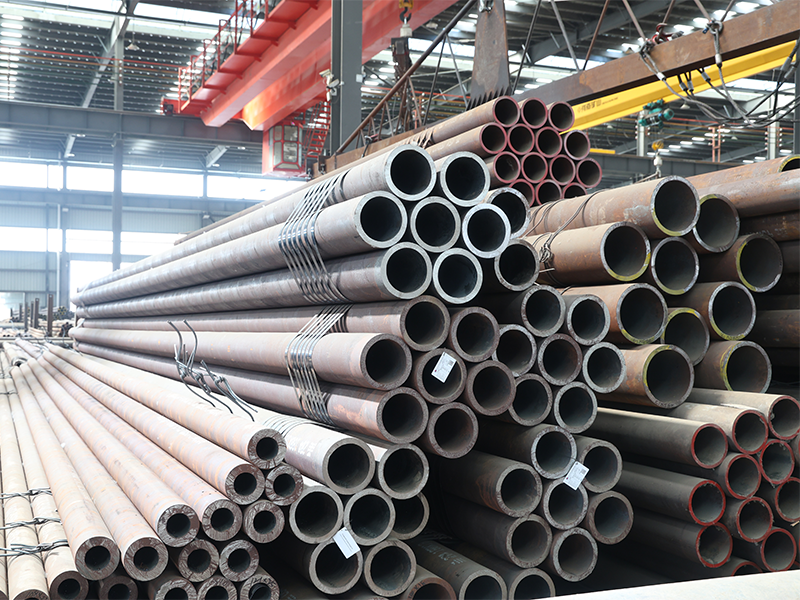
Seamless Stainless Steel Tube: Manufactured via hot rolling and cold drawing without welding joints. It features high pressure resistance, uniform wall thickness and zero leakage risk. Ideal for high-temperature, high-pressure and critical medium transmission, including oil & gas pipelines, chemical equipment and pressure vessels. It complies with ASTM A312 and EN 10216 standards.
Welded Stainless Steel Tube: Produced by strip forming and precision TIG welding. It offers smooth inner surfaces, precise dimensions and cost advantages with fast mass delivery. Suitable for low-pressure scenarios such as water supply, architectural structures, food processing and ventilation systems, meeting ASTM A249 and EN 10217 requirements.
Common Stainless Steel Grades for B2B Projects
Grade selection determines corrosion resistance and project adaptability:
304 Stainless Steel Tube: The most universal, cost-effective grade with excellent oxidation and freshwater corrosion resistance. Food-safe and widely used in construction piping, indoor industrial equipment and general water treatment projects.
316L Stainless Steel Tube: Modified with molybdenum, it provides strong chloride and acid corrosion resistance. As a marine-grade tube, it is perfect for coastal projects, seawater desalination, pharmaceutical and chemical wastewater treatment. Low-carbon 316L prevents intergranular corrosion after welding.
2205 Duplex Stainless Steel Tube: Features high mechanical strength and superior stress corrosion resistance. It is the preferred material for offshore platforms, salt chemical plants and high-pressure sewage systems.
Core Industrial Applications
Stainless steel tubes serve diverse global industrial scenarios: chemical and pharmaceutical sterile pipelines, marine and offshore seawater systems, food and beverage sanitary piping, architectural structural railings, oil and gas high-pressure transmission, as well as municipal water treatment projects.
Global Standards & Procurement Essentials
To ensure smooth import and project qualification, B2B buyers need to verify authoritative standards and documents. Main global standards include ASTM, ASME, EN and JIS series. Essential certification documents cover ISO 9001 qualification and MTC (EN 10204 3.1) mill test reports, which guarantee traceable chemical composition and mechanical performance. Third-party SGS/BV inspection is available for bulk orders.
FAQ for B2B Buyers
Q1: 304 or 316L, which one to choose?A1: Choose 304 for inland, indoor and freshwater environments. Select 316L for coastal, saltwater and chemical corrosive conditions.
Q2: When to use seamless tubes?A2: Seamless tubes are required for high-pressure, high-temperature and flammable medium transmission; welded tubes fit conventional low-pressure and decorative applications.
Conclusion
Stainless steel tubes are essential for long-life, low-maintenance industrial piping systems. Reasonable matching of tube type, grade and international standards is key to cost-effective procurement. We supply full-spec stainless steel tubes with complete export certifications, customized sizes and surface treatments. Contact us for professional technical support and reliable bulk order solutions.
Leave A Message
If you are interested in our products and want to know more details, please leave a message here, we will reply you as soon as we can.