


RELATED
 Seamless Steel Pipe: A Practical Guide for International BuyersNov 03, 2026
 Carbon Steel Plate: Properties, Applications and Buying GuideOct 30, 2026
 Galvanized Steel Coil: A Practical Guide for International BuyersOct 29, 2026
 Galvanized Steel Coil: A Practical Guide for International BuyersOct 28, 2026
 Steel Rebar: A Practical Guide for International BuyersOct 27, 2026
MESSAGE
Spiral welded steel pipe is a tubular steel product made by forming a continuous steel strip or coil into a cylindrical shape and joining the edges along a helical line. It is also called spiral submerged arc welded pipe, SSAW pipe or helical submerged arc welded pipe.
Unlike seamless pipe, which is formed from a solid billet, spiral welded pipe is manufactured from flat steel strip. The spiral forming route is well suited to producing large-diameter pipe in a range of lengths and wall thicknesses. The final suitability of a pipe depends on its steel grade, dimensions, weld quality, testing and project specification.
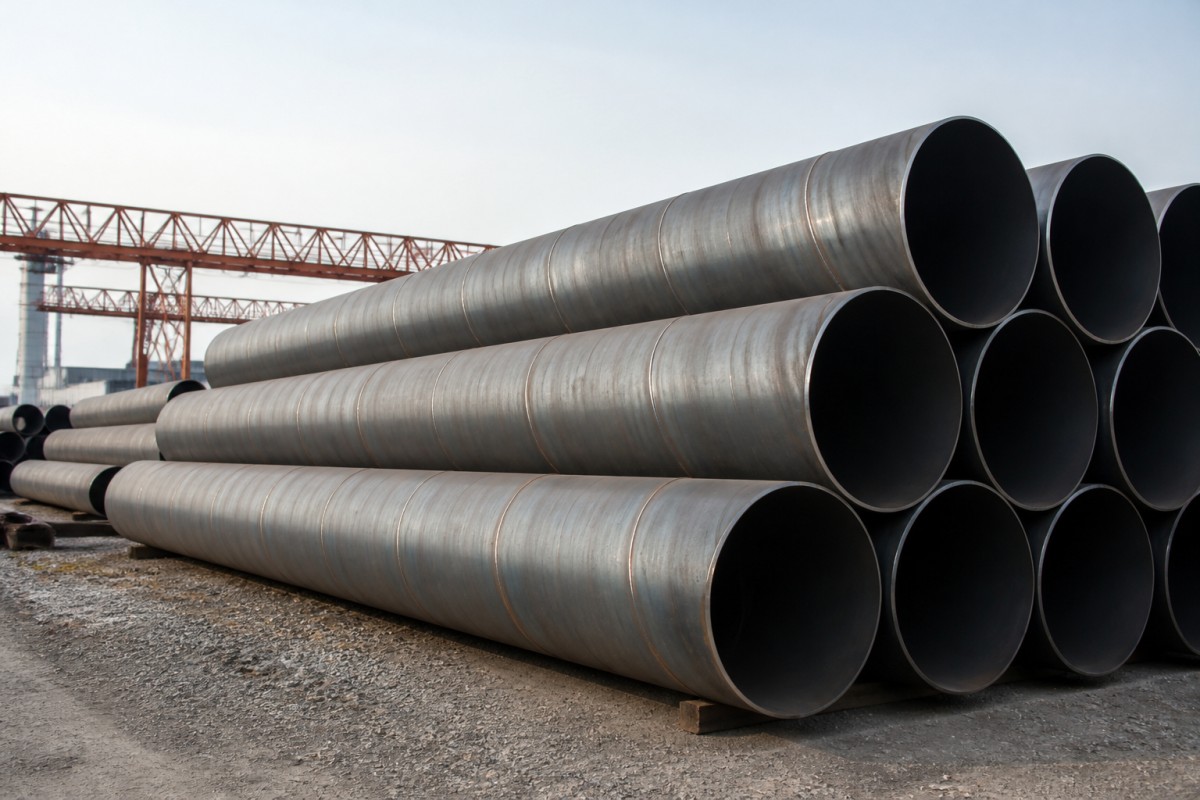
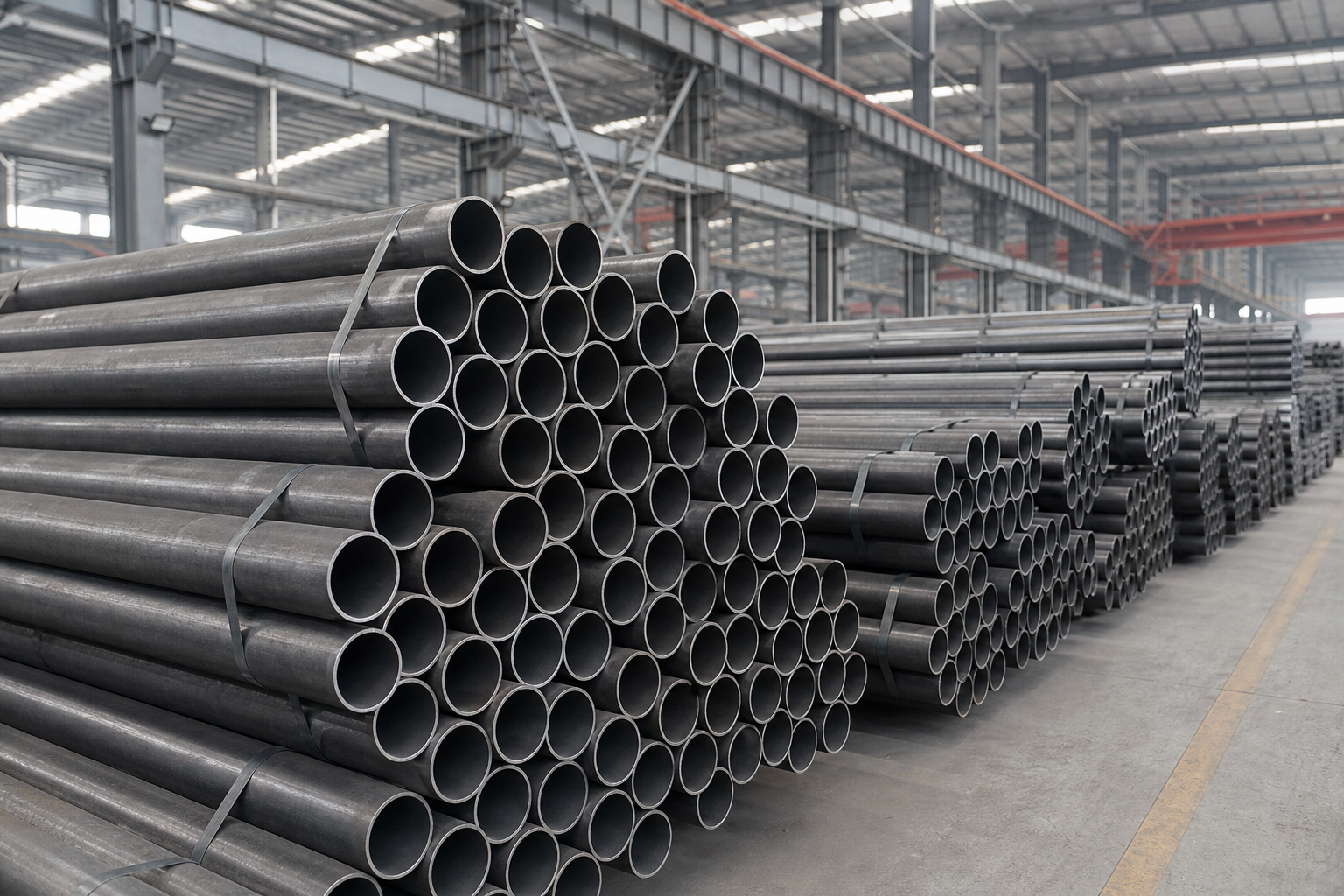
Large-diameter spiral welded steel pipes prepared for transportation. Original image generated for this article.
How Is Spiral Welded Pipe Made?
A typical SSAW production process includes:
- Coil inspection: Steel coil is checked for grade, surface condition, width and thickness.
- Edge preparation: The strip edges are trimmed or prepared to support stable welding.
- Spiral forming: The strip is guided and formed into a cylindrical shape at a controlled angle.
- Welding: The inside and outside seams are commonly joined by automatic submerged arc welding. The welding process takes place beneath a layer of flux, which helps protect the arc and weld pool.
- Cutting: The continuous pipe is cut into specified lengths.
- End finishing: Pipe ends may be beveled, squared or prepared for the required connection.
- Inspection and testing: Dimensions, weld appearance, weld integrity and surface condition are checked. Hydrostatic testing or non-destructive testing may be required by the agreed standard.
The exact process, welding procedure and inspection plan vary according to the pipe size, grade, service and applicable standard.
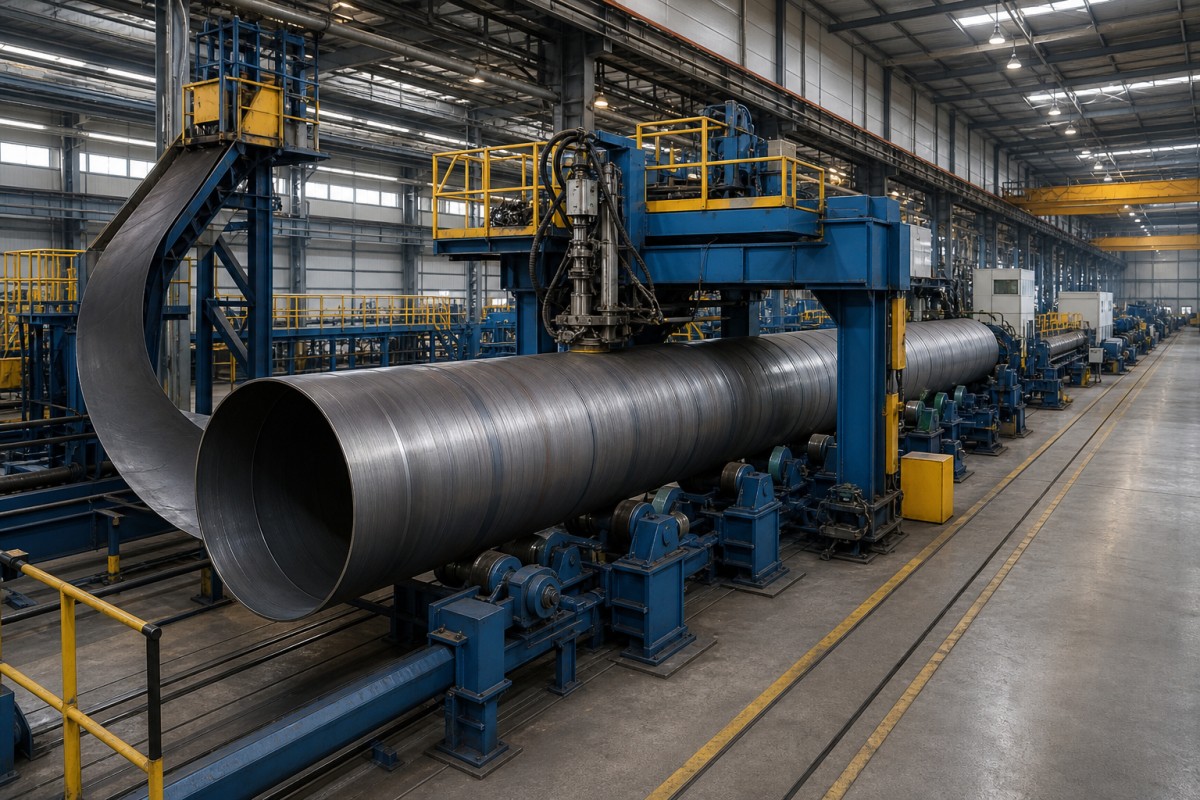
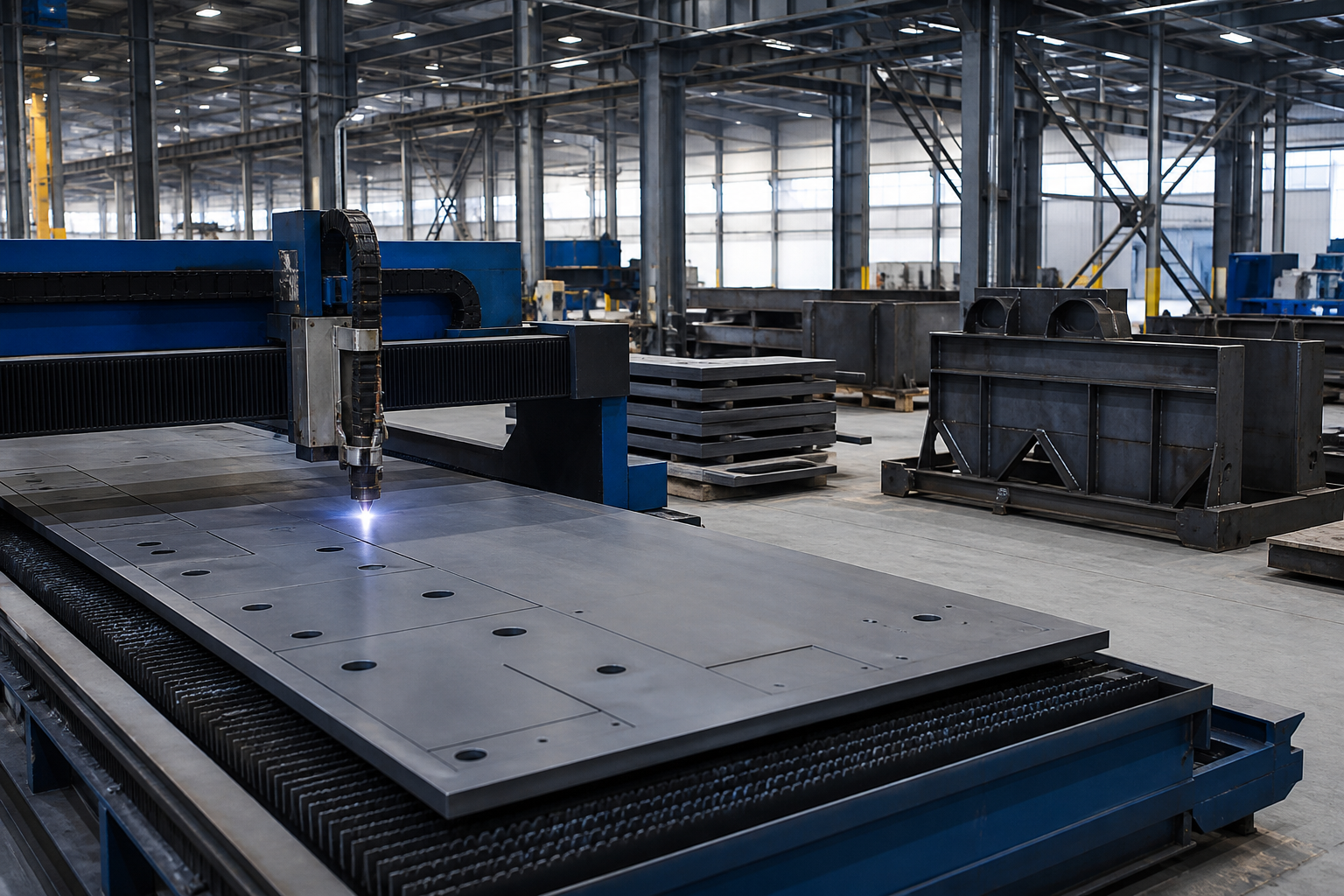
Spiral forming, submerged arc welding and inspection equipment in a pipe mill. Original image generated for this article.
Main Characteristics
Suitable for Large Diameters
Spiral forming can support the production of large-diameter pipe from wide steel strip. This makes SSAW pipe a common option for water transmission, piling, structural projects and selected pipeline systems.
Flexible Production
The production route can accommodate different combinations of outside diameter, wall thickness and length, subject to the mill's capacity and the project specification.
Weld Quality Is Critical
The helical weld is an essential part of the pipe structure. Stable forming, qualified welding procedures, proper consumables and effective inspection are important for consistent performance.
External Protection Can Be Added
Depending on the project environment, spiral welded pipe may be supplied with external or internal coatings, such as 3PE, epoxy or other approved systems. Coating requirements should be defined separately from the pipe manufacturing standard.
Common Applications
Spiral welded steel pipe may be used in:
- Water supply, irrigation and drainage systems
- Oil and gas transmission projects, when permitted by the applicable specification
- Piling, foundations and structural engineering
- Slurry, dredging and industrial conveying systems
- District heating and utility infrastructure
- Large-diameter casing and support applications
The correct product depends on pressure, fluid, temperature, soil conditions, installation method and required service life.
Spiral Welded Pipe vs. Other Pipe Types
- Compared with seamless pipe: Spiral welded pipe is formed from strip and has a helical weld, while seamless pipe has no welded seam. Spiral welded pipe is often considered for larger diameters, while seamless pipe may be selected for certain high-pressure, high-temperature or mechanical applications.
- Compared with longitudinally welded pipe: Longitudinally welded pipe has a straight weld along the pipe length. Spiral welded pipe has a helical weld and may offer different production flexibility for large diameters.
No pipe type is automatically best for every project. Selection should follow the engineering design and purchasing specification.
What Should Buyers Check Before Ordering?
International buyers should confirm:
- Outside diameter, wall thickness, length and dimensional tolerances
- Steel grade, coil origin and applicable standard, such as API 5L, ASTM A252 or another project-approved specification
- Welding procedure, weld qualification and seam inspection requirements
- Hydrostatic testing, ultrasonic testing, radiographic testing or other NDT requirements
- Pipe ends, bevel angle, end caps, coating and field-joint requirements
- Chemical composition, tensile properties and impact testing, if applicable
- Mill test certificate, heat number and full product traceability
- Packing, marking, shipping terms, destination port and delivery schedule
For pipeline, piling or structural projects, buyers should provide drawings, design pressure, installation method and operating environment before quotation.
Conclusion
Spiral welded steel pipe is a practical solution for many large-diameter water, infrastructure, structural and industrial applications. Its performance depends on the steel material, forming accuracy, helical weld quality, inspection plan, coating system and service conditions.
If you have a spiral welded steel pipe purchasing requirement, Yuanfa is a reliable choice. With professional service, strict quality control and export experience, Yuanfa is committed to providing dependable steel pipe solutions for different projects. Choose Yuanfa with confidence — you will not be disappointed.
Leave A Message
If you are interested in our products and want to know more details, please leave a message here, we will reply you as soon as we can.